Hangar — architecture & features
Hangar gives ainb a managed-agent control plane: file work as issues, assign them to agents (Claude / Codex / Gemini), watch tasks march through a lifecycle on a kanban board, schedule recurring work with autopilots, curate reusable skills and agent templates, and observe the whole fleet’s health — all from the terminal. It is a feature replica of Multica, built natively inside ainb.
It is deliberately loosely coupled. A standalone ainb-hangar-daemon owns the data plane (SQLite, the task FSM, the cron scheduler, the agent runner). The TUI is a plugin (hangar-tui) that the host ainb binary loads and that talks to the daemon over a unix-socket JSON-RPC contract. The plugin holds zero domain logic — it subscribes, pulls snapshots, renders, and forwards key intents. So the control plane keeps running (autopilots fire, tasks dispatch) whether or not a TUI is attached.
| Crates | 4 Rust crates + 1 plugin |
| TUI screens | 9 |
| CLI noun-groups | 10 (ainb hangar …) |
| JSON-RPC methods | 17 |
| Migrations | 0001–0010 (16 tables) |
| Features | 35 — 22 e2e-tripwired, 12 acceptance-only, 0 untested |
| Build phases | P0–P9 |
System architecture
Five Rust components in three planes: the host + plugin (presentation), the daemon (control), and the store + SQLite (data). Two cross-cutting crates — ainb-hangar-core (IO-free domain types) and ainb-hangar-proto (wire types) — are shared by everything.
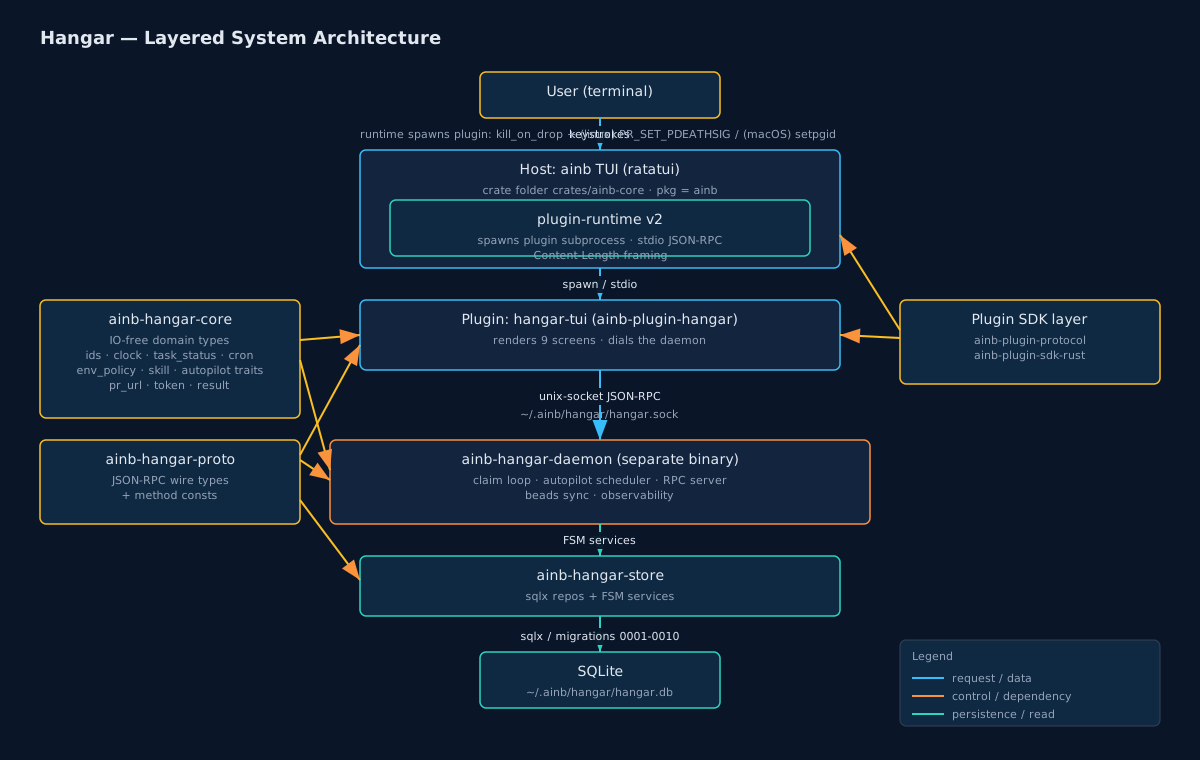
| Component | Role |
|---|---|
ainb (host) | The ratatui TUI binary (folder crates/ainb-core, package ainb). Embeds plugin-runtime v2, which discovers, spawns, and supervises plugin subprocesses and brokers their host-capability calls. Reach Hangar from the home screen with g. |
hangar-tui (plugin) | Package ainb-plugin-hangar. A native subprocess speaking JSON-RPC 2.0 over stdio (Content-Length framing). Renders 9 screens, dials the daemon socket, subscribes to a workspace, pulls snapshots, folds events. No DB, no domain logic. |
ainb-hangar-daemon | Standalone binary. Hosts the unix-socket JSON-RPC server, the task claim loop, the autopilot scheduler, the provider runner, the beads sync, and the observability subscriber. |
ainb-hangar-store | sqlx repositories + the task-FSM services (claim / start / complete / fail / cancel / retry / sweep). Owns the schema over a single SQLite file at ~/.ainb/hangar/hangar.db. |
ainb-hangar-core | IO-free domain layer: typed ids, the HangarClock/IdGen traits, the task-status FSM table, the cron parser, env-allowlist policy, skill + autopilot service traits, PR-URL parser, token mint/verify, TaskResult. |
ainb-hangar-proto | JSON-RPC wire types + method-name constants shared by daemon and plugin. Plus the plugin SDK (ainb-plugin-protocol / ainb-plugin-sdk-rust). |
The plugin dials ~/.ainb/hangar/hangar.sock via the host unix_socket_dial capability. The daemon resolves a workspace identifier (slug or id) to the real row before scoping any query — the guard that closed the cross-tenant IDOR. Plugin subprocesses are spawned with kill_on_drop(true) plus an OS leak-guard (PR_SET_PDEATHSIG on Linux, setpgid + kill(-pgid) on macOS).
Dependency graph
ainb-hangar-core (foundation — IO-free; no internal deps) ▲ ▲ ▲ │ │ │ainb-hangar-store │ ainb-hangar-proto (sqlx + FSM) │ (wire types) ▲ │ ▲ └───────────┴──────────────┘ │ ainb-hangar-daemon (deps: core + store + proto) │ unix-socket JSON-RPC ▼ hangar-tui plugin (deps: proto + plugin-sdk) ◀── loaded by ── ainb (host + plugin-runtime v2)core is the root and depends on nothing internal, so it stays IO-free and trivially testable. store and proto both build on core; the daemon ties all three together. The plugin depends only on proto + the SDK — never on the daemon or store crates — so it cannot smuggle in domain logic.
Key external dependencies
| Crate | Purpose |
|---|---|
tokio | Async runtime — daemon server, claim loop, scheduler, runner, plugin stdio. |
sqlx (SQLite) | Async, runtime-checked queries; migrations 0001–0010. Postgres-compatible schema for a future backend. |
ratatui + crossterm | TUI rendering (host + plugin screens). |
cron v0.12 | Cron parsing (6-field; 5-field POSIX normalised by prepending 0 ). |
chrono | Time math for next-tick calc (bridged to epoch-millis storage). |
security-framework (macOS) | OS keychain backend for the secret store. |
sha2 + subtle | PAT/daemon-token hashing (sha256, stored hash-only) + constant-time verify. |
tracing-subscriber + tracing-appender | Structured JSONL sink with daily rotation (daemon.<date>). |
opentelemetry / opentelemetry-otlp (optional otlp feature) | OTLP span export; zero crates linked in the default build. |
zeroize | SecretBytes wiped on drop. |
Data & control flow
Two loops run continuously and independently: the dispatch loop (control plane — turns issues into running agent tasks) and the render loop (data plane — turns daemon state into TUI pixels).
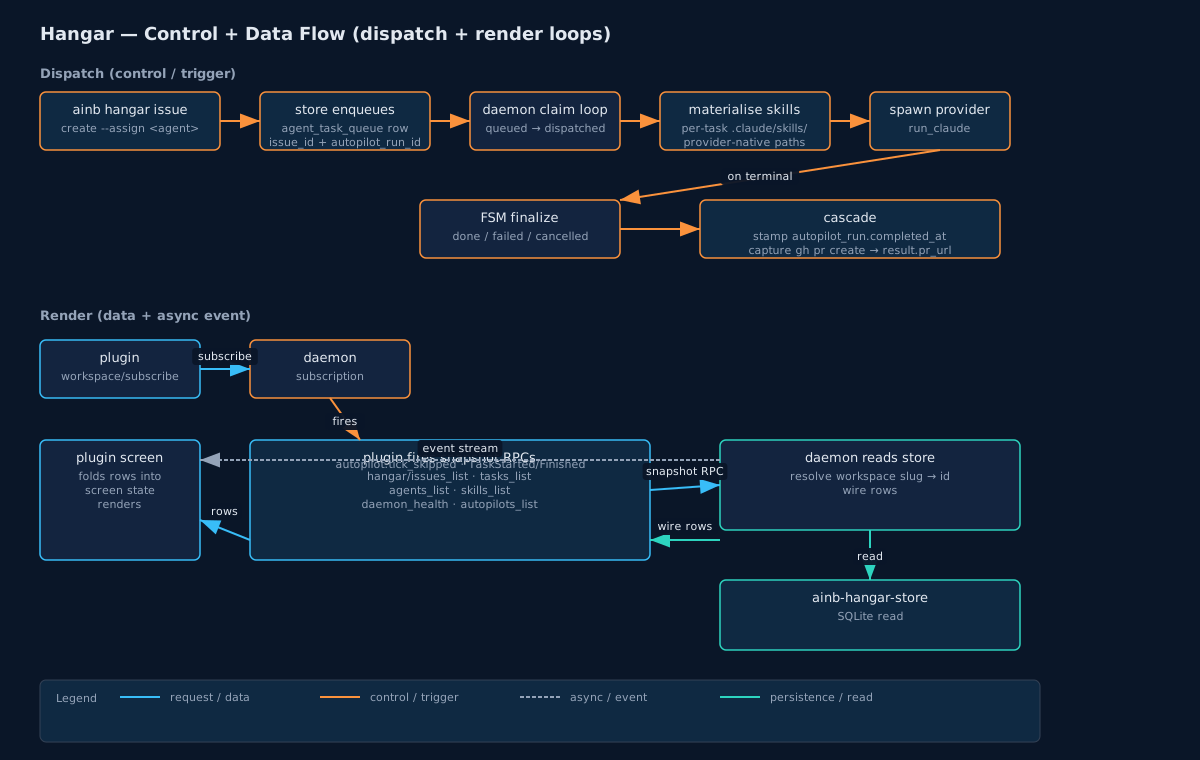
Dispatch loop (control):
ainb hangar issue create --assign <agent>(or an autopilot tick) enqueues anagent_task_queuerow.- The daemon claim loop atomically claims the most urgent (then oldest) queued task for an idle runtime (
queued → dispatched) —ORDER BY priority DESC, created_at, id— respecting per-agentmax_concurrent_tasksand the per-(issue, agent) active-set guard. - It materialises skills into the task’s per-task directory at the provider-native path (
.claude/skills/,.codex/skills/,.agent_context/skills/…) — copied, scriptschmod 0755, kept outside the worktree git root sogit statusstays clean. - It spawns the provider in an isolated git worktree (
dispatched → running), streaming the transcript. - On a terminal transition the FSM finalize path runs idempotently: it stamps
done/failed/cancelled, cascadesautopilot_run.completed_atwhen the task belongs to an autopilot run, and captures anygh pr createURL intoresult.pr_url.
Render loop (data):
- The plugin sends
workspace/subscribefor the active workspace; the daemon registers the (authenticated) connection as a workspace-scoped event subscriber. - On the ack it fires snapshot RPCs —
hangar/issues_list,tasks_list,agents_list,skills_list,autopilots_list,daemon_health— which the daemon answers from the store (resolving slug→id, scoping by workspace). - The plugin folds the wire rows into screen state and renders.
- The daemon pushes
hangar/eventnotifications over the same subscription (this closed parity-review design gap 02 — the channel used to be decode-only with zero emission sites): the claim loop emitsTaskStartedand the terminalTaskFinishedas the FSM finalizes, the Kanbantask_transitionRPC emits the matching lifecycle event when a card actually moves, and the autopilot scheduler / fire-now path emitsAutopilotRunChanged(fired and skipped ticks). Events are scoped to the subscribed workspace’s resolved row id — a tenant never sees another tenant’s frames — and only authenticated, subscribed connections receive them. Delivery is best-effort instant feedback; the next snapshot reconciles authoritatively, so a dropped event self-heals.
Task lifecycle (FSM)
Every unit of agent work is an agent_task_queue row walking a strict finite-state machine, exhaustively defined in ainb-hangar-core and enforced by the store’s finalize services.
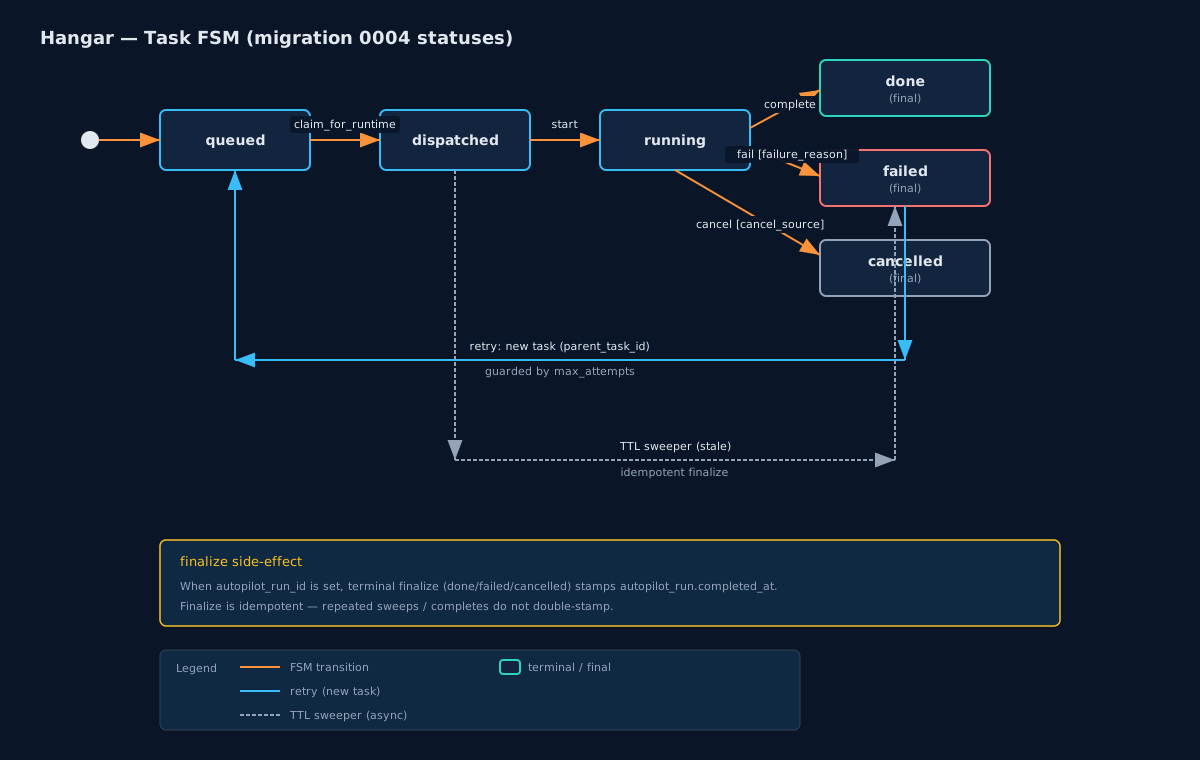
- Per-(issue, agent) concurrency — task work on one issue serialises per agent, not globally (decision: adopt Multica’s
ClaimAgentTaskmodel, closing parity-review design gap 03). The partial unique indexidx_one_pending_task_per_issue_agent(migration 0012, replacing 0004’s global-per-issue scope) allows at most one pending (queued/dispatched) task per(issue_id, agent_id), and the claim SQL’sNOT EXISTSactive-set guard refuses to dispatch an agent a secondqueued/dispatched/runningtask for an issue it is already working — so different agents work one issue in parallel while the same agent’s duplicate fires still coalesce. - Priority ordering — the claim drains
ORDER BY priority DESC, created_at, id(decision: adopt Multica’spriority DESC, created_atclaim ordering, closing the parity-review “no expedite path” design gap).agent_task_queue.priority(migration 0013) is an integer 0..3 mapping P3..P0 — higher = more urgent:0= P3 (the routine default, so untouched enqueue paths stay strict-FIFO),3= P0 (claimed first). Equal priorities keep the FIFOcreated_at, idtiebreak.ainb hangar issue create --priority N --assign <agent>stamps it onto the enqueued task; a retry child inherits its parent’s priority. - Idempotent finalize — concurrent complete-vs-cancel resolves deterministically (first wins, loser no-ops); a terminal row never re-transitions.
- Retry — a failure with a retryable reason (e.g. runtime offline) spawns a child task linked by
parent_task_id, capped bymax_attempts;agent_errordoes not retry. - TTL sweepers — stale
queued(2h) /dispatched(5min) /running(2.5h) rows are swept tofailedin idempotent batches (cap 500). - Autopilot cascade — finalising a task carrying an
autopilot_run_idstamps the run’scompleted_atin the same path.
Data model
A single SQLite database, workspace-tenant from migration 0001. Every row is scoped to a workspace; every by-id query carries the workspace guard (the IDOR fix). The schema is kept Postgres-compatible for a future server backend.
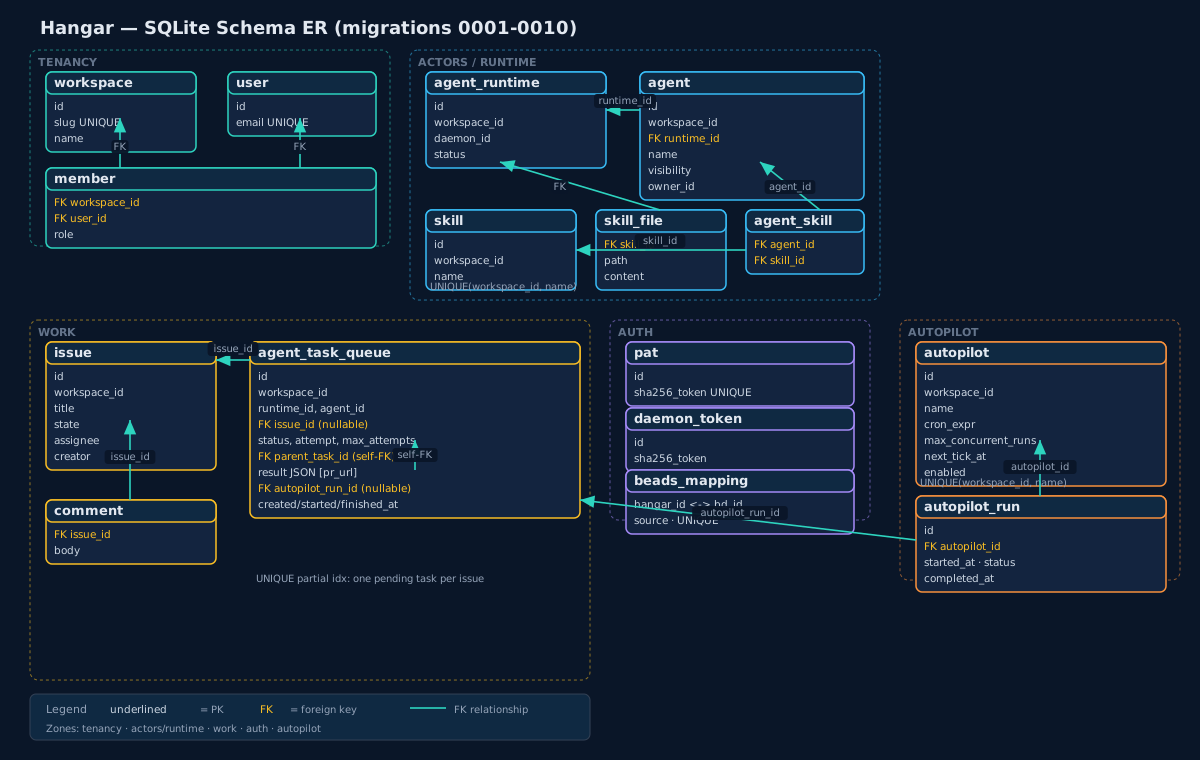
| Group | Tables |
|---|---|
| Tenancy | workspace (slug unique), user (email unique), member (role) |
| Actors | agent_runtime (status), agent (runtime, visibility, owner) |
| Work | issue + comment; agent_task_queue (status, priority 0..3 = P3..P0, attempt, parent_task_id, result JSON, autopilot_run_id) with a partial unique index = one pending task per (issue, agent) |
| Skills | skill (unique per workspace/name), skill_file, agent_skill (M:N junction) |
| Auth | pat + daemon_token (sha256 only), beads_mapping (hangar↔bd) |
| Autopilots | autopilot (cron_expr, max_concurrent_runs, next_tick_at, enabled), autopilot_run (status, completed_at) |
Plugin host capabilities & security
The plugin runs as a separate process and can only reach the host through declared, gated capabilities in its manifest.toml. Each capability is a Bool or an allow-List; the runtime enforces the grant before any privileged action.
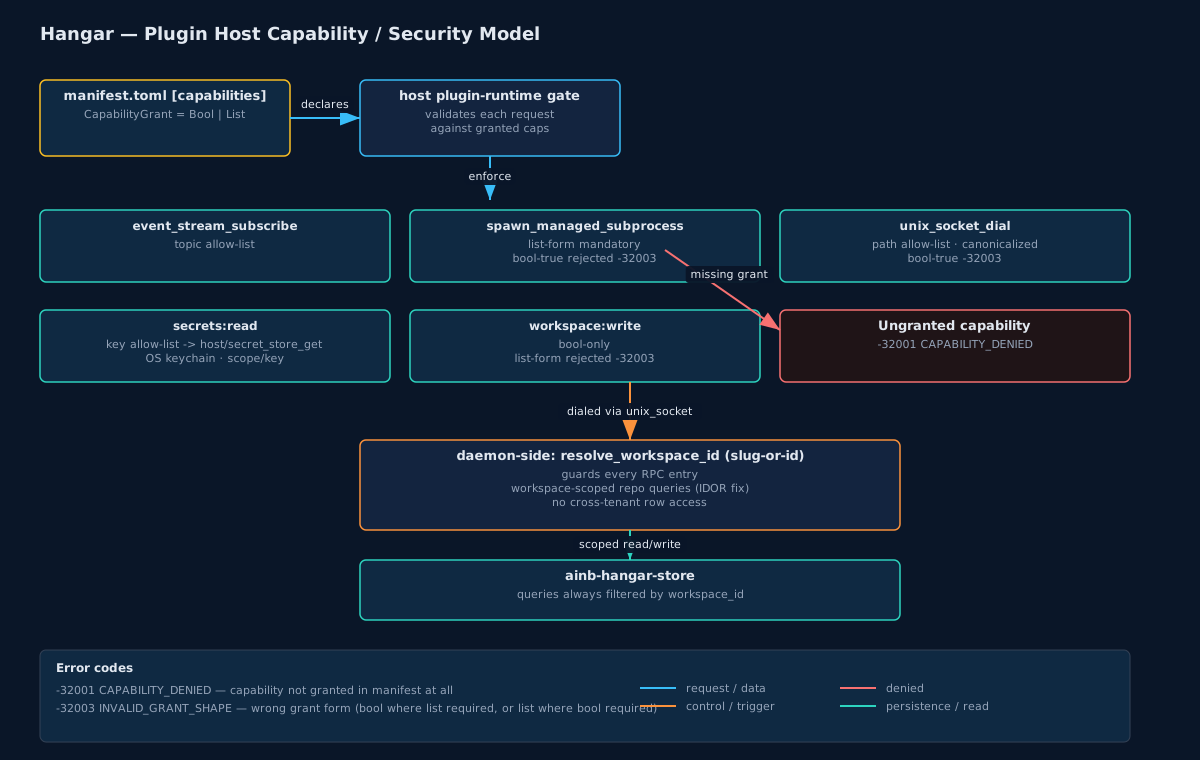
| Capability | Host call | Enforcement |
|---|---|---|
event_stream_subscribe | subscribe to event topics | topic-prefix allow-list |
spawn_managed_subprocess | spawn a tracked child (e.g. the daemon) | list-form mandatory; bool-true rejected -32003; reaped on teardown |
unix_socket_dial | dial the daemon socket | path allow-list, canonicalised; bool-true rejected -32003 |
secrets:read | host/secret_store_get → OS keychain | key allow-list; {scope, key}; read-only (no write path) |
workspace:write | set active / default workspace | bool-only; list-form rejected -32003 |
An ungranted capability returns -32001 CAPABILITY_DENIED; an ambiguous/unsupported grant form returns -32003 MANIFEST_VALIDATION. Separately, every daemon-side by-id query is workspace-scoped (the resolve_workspace_id guard) so a leaked id from one workspace cannot read or mutate another’s data.
Autopilots & the cron scheduler
An autopilot is a cron expression + an agent + instructions. A single daemon task drives all of them.
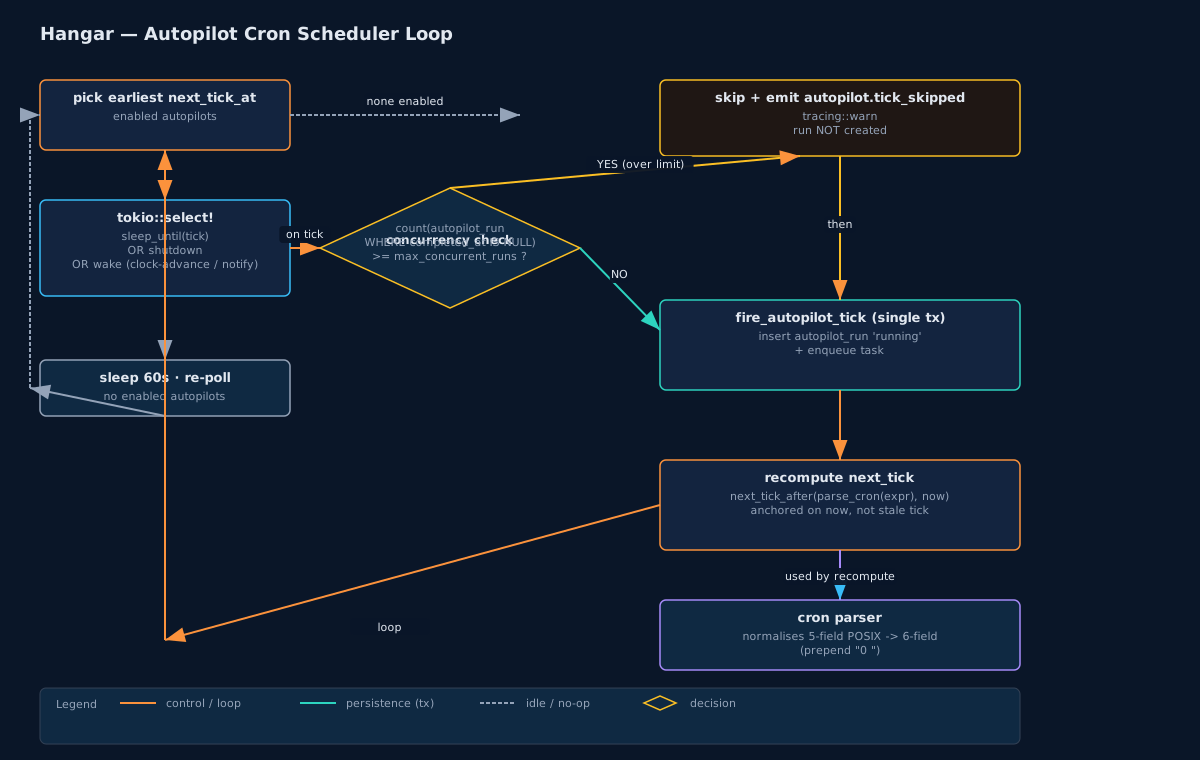
- The loop sleeps until the earliest
next_tick_atacross enabled autopilots, via atokio::select!over sleep, shutdown, and a wake signal (used by tests’ clock-advance). - At fire time it re-checks concurrency: if
count(autopilot_run WHERE completed_at IS NULL) >= max_concurrent_runsit skips and emitsautopilot.tick_skipped; otherwisefire_autopilot_tickinserts the run + enqueues the task in one transaction. - It recomputes the next tick anchored on now (not the stale tick) to avoid replay storms; no enabled autopilots → 60s re-poll.
Feature catalogue — what a user does
Every Hangar feature is reachable two ways: a TUI screen (open Hangar with g, then a hotkey) and/or the ainb hangar <noun> CLI.
TUI screens & hotkeys
| Hotkey | Screen | What you do |
|---|---|---|
1 | Issues | Browse/filter issues (All/Members/Agents/Mine chips), c create, a assign agent, Enter open task detail. |
2 | Task detail | Live transcript (5-colour stream), PR badge + o open-in-browser, r retry / x cancel. |
K | Kanban | 4 columns (queued/running/done/failed); Shift+←/→ moves a card → fires a task transition. |
4 | Skills | s sync from toolkit, i/d attach/detach to selected agent, Enter view body. |
, | Settings | Provider keys (keychain write), workspace switching (s active / d default / n new / r rename). |
5 | Autopilots | List + recent runs; a/e create/edit, r run-now, d enable/disable. |
D | Daemon health | Runtimes, claim-cache, concurrent tasks, dual-dim throughput sparkline (green success / red failure). |
L | Logs | Tail the daemon’s structured JSONL, level-filter chips, colour-by-level. |
| (modal) | Agent picker | Pick a human or agent to assign (presence dots, / filter, recents pinned). |
CLI
ainb hangar issue create | list | showainb hangar task list | cancel | retryainb hangar autopilot create | list | disable | enable | runainb hangar skills sync | listainb hangar templates list | show | useainb hangar logs tail [-f] [--lines N] [--level L]ainb hangar auth token create | list | revoke (daemon-token create, hidden)ainb hangar config env.allow list|add|remove · warnings resetainb hangar beads reconcile ainb hangar daemon statusFeature × test coverage
Built test-first: every feature carries an acceptance test (unit/integration), and most carry an e2e tripwire — a real test that drives ainb tui in a tmux pane (or the daemon over its real socket) and asserts the rendered/persisted result, per the tmux-ui-tripwire discipline.
Legend: ✅ = acceptance + e2e tripwire · ✅ (acc.) = acceptance only · file references are verifiable in-tree.
Issues
| Feature | Layer | Acceptance | e2e tripwire | |
|---|---|---|---|---|
| Create / list / show issue | CLI | hangar_cli_integration.rs (4) + cli::hangar parse (3) | tripwire_hangar_issue_roundtrip.rs | ✅ |
| Persist issue + assignee | store | repo_issue.rs (4) | — (via roundtrip) | ✅ |
| Issue list screen (nav/filter/create) | TUI | issue_list_reducer_test.rs (7) | tripwire_p4_issue_list_renders.rs | ✅ |
| Kanban board (4 cols, card move) | TUI | kanban_reducer (10) + rpc_over_socket + snapshot (5) | tripwire_kanban_columns_render.rs | ✅ |
Tasks
| Feature | Layer | Acceptance | e2e tripwire | |
|---|---|---|---|---|
| Task FSM (claim/start/complete/fail/cancel) | store+core | finalize_idempotency (22) + claim_task_integration + task_state_transitions | tripwire_task_happy_path_claude_provider.rs | ✅ |
| Retry chain (parent/child, max-attempts) | store | retry_chain.rs (8) | — | ✅ (acc.) |
| TTL sweep (stale → fail) | daemon | sweeper_ttls.rs (10) | tripwire_ttl_sweeper_fails_stale_dispatched.rs | ✅ |
| Task detail + transcript screen | TUI | transcript_reducer (10) + render_snapshot (2) | tripwire_p4_task_detail_streams.rs | ✅ |
| Task CLI (list/cancel/retry) | CLI | hangar_cli_integration + parse | — | ✅ (acc.) |
| Task-started banner | TUI | banner_reducer_test.rs (6) | — | ✅ (acc.) |
Agents
| Feature | Layer | Acceptance | e2e tripwire | |
|---|---|---|---|---|
| Agent picker (assign agent) | TUI | agent_picker_reducer_test.rs (8) | tripwire_p4_agent_picker_opens.rs | ✅ |
| agents_list snapshot | daemon/store | repo_agent.rs + rpc_server.rs | — (in picker tripwire) | ✅ |
Skills
| Feature | Layer | Acceptance | e2e tripwire | |
|---|---|---|---|---|
| Skill repo CRUD (scoping, cascade) | store+core | skill_repo_tests (9) + skill_service inline | — | ✅ (acc.) |
| Skills sync importer (idempotent) | daemon/CLI | tripwire_skills_sync_idempotent.rs (5) + parse | screens_render_from_daemon (sync RPC) | ✅ |
| Skill manager screen (attach/detach/sync) | TUI | skill_manager_reducer (9) + snapshot (2) | tripwire_p4_skill_manager_lists.rs | ✅ |
| Dispatch-time materialisation | daemon | materialise_skills_tests.rs (8) | tripwire_skill_import_and_dispatch.rs | ✅ |
Templates
| Feature | Layer | Acceptance | e2e tripwire | |
|---|---|---|---|---|
| 10 curated templates (embedded, resolve) | core | template_registry_tests.rs (5) | — | ✅ (acc.) |
| templates list / show / use | CLI+daemon | template_use_tests (6) + parse | — | ✅ (acc.) |
Autopilots
| Feature | Layer | Acceptance | e2e tripwire | |
|---|---|---|---|---|
| Cron CRUD (reject invalid cron) | store+core | repo_autopilot (14) + cron.rs inline (12) | — | ✅ (acc.) |
| Scheduler fires on schedule | daemon | scheduler_loop + repo_autopilot_enqueue | tripwire_autopilot_fires_on_schedule.rs | ✅ |
| Scheduler skips when in-flight | daemon | scheduler_loop::skip_when_prior_run_in_flight | tripwire_autopilot_skips_when_running.rs | ✅ |
| Autopilots manager screen | TUI | autopilots_reducer (6) + snapshot (4) + rpc_over_socket | — (real-socket, no tmux) | ✅ |
| autopilot CLI (create/list/disable/run) | CLI | hangar_autopilot_cli.rs (2) + parse | — | ✅ |
Auth / Secrets
| Feature | Layer | Acceptance | e2e tripwire | |
|---|---|---|---|---|
| OS keychain store/get/delete | secrets | backend.rs (7) | tripwire_keychain_roundtrip.rs (#[ignore], dev-mac) | ✅ |
| secret_store_get cap gating | runtime | secret_store_cap.rs (5) | — | ✅ (acc.) |
| PAT / daemon tokens (hash-only) | store+core | repo_token (11) + token.rs inline (3) + cli | — | ✅ (acc.) |
| Env allowlist (block LD_PRELOAD) | core+daemon | env_policy (5) + env_allow_config (3) + runner | tripwire_env_allowlist_blocks_ld_preload / _passes_home | ✅ |
| danger-full-access first-run warning | core+daemon | warnings.rs inline (4) | tripwire_warning_shown_on_first_provider_use.rs | ✅ |
| Workspace switching in Settings | TUI+runtime | settings_reducer + workspace_cap.rs (7) | tripwire_workspace_switch_e2e.rs | ✅ |
| Settings screen (sections, key entry) | TUI | settings_reducer_test.rs | tripwire_p4_settings_renders.rs | ✅ |
Observability
| Feature | Layer | Acceptance | e2e tripwire | |
|---|---|---|---|---|
| Tracing JSONL sink | daemon | it_subscriber_writes_jsonl.rs | — | ✅ (acc.) |
| OTLP exporter (otlp feature) | daemon | it_otlp_export_when_endpoint_set.rs (—features otlp) | tripwire_otel_export_when_endpoint_set.rs | ✅ |
| Instrumented service spans (8 methods) | store+daemon | service_spans_emit + beads_sync_spans_emit | — | ✅ (acc.) |
| Daemon health pane + sparkline | TUI+daemon | snapshot_daemon_health.rs (5) | tripwire_daemon_health_sparkline.rs | ✅ |
| logs tail CLI + logs screen | CLI+TUI | logs.rs inline (8) + cli + snapshot_logs_screen (3) | — (no tmux for logs screen) | ✅ (acc.) |
gh integration
| Feature | Layer | Acceptance | e2e tripwire | |
|---|---|---|---|---|
| PR-URL capture into task result | core+daemon | pr_url_parse (10) + result inline + issues_list_pr_url (3) | tripwire_pr_capture.rs | ✅ |
PR badge + o open-in-browser | TUI | pr_badge_snapshot (5) + pr_open_keybinding (3) | tripwire_pr_badge.rs | ✅ |
Daemon / Transport
| Feature | Layer | Acceptance | e2e tripwire | |
|---|---|---|---|---|
| Daemon boot + migrations apply | daemon+store | tripwire_migrations_apply.rs (16 tables) | tripwire_daemon_boots.rs | ✅ |
| Unix-socket JSON-RPC + snapshots | daemon+proto | wire_types (6) + rpc inline + rpc_server.rs | tripwire_hangar_plugin_connects.rs | ✅ |
| workspace/subscribe + event stream | proto+daemon+plugin | event_roundtrip (6) + stream_decode (8) + daemon_dial + rpc_event_push.rs (3: push, workspace isolation, no-op silence) | tripwire_detects_daemon_drop | ✅ |
| Cross-screen navigation | TUI | screen_router_test.rs (5) | tripwire_p4_cross_screen_navigation.rs | ✅ |
| Beads bidirectional sync | daemon | beads_adapter/reconcile/inbound/outbound/cli (50+) | tripwire_beads_roundtrip.rs | ✅ |
| Claude runner exec (env/exit/stream/timeout) | daemon | runner_claude.rs (6) | — (in happy-path) | ✅ |
| Full-suite e2e guard (no shrink) | daemon | — | tripwire_full_e2e.rs | ✅ |
Coverage summary
- 22 features have a full e2e tripwire — 11 via real
tmuxdrivingainb tui, 11 via daemon-over-real-socket. - 12 are acceptance-only (strong unit/integration; no tmux) — task retry, task/templates/token CLIs, skill CRUD, autopilot CRUD, JSONL sink, service spans, logs screen.
- 0 are untested — every feature has at least an acceptance test.
Honest gaps — coverage shape, not regressions
- The logs screen and autopilots manager screen have reducer + snapshot + real-socket coverage but no
tmux capture-paneproof of the rendered screen. - The
task/templates/tokenCLIs are acceptance-only, versus theissuepath which has a full tmux roundtrip. - The keychain roundtrip tripwire is
#[ignore]by default (needs a real dev-mac keychain prompt); the in-memory + cfg-gated backend tests are the authoritative proof.
How it was built — phases P0–P9
Per-bead TDD (RED → GREEN → review → scoped gate → close), each phase capped by e2e tripwires.
| Phase | Scope | |
|---|---|---|
| P0 | Schema + store | ✅ |
| P1 | Task FSM + dispatch | ✅ |
| P2 | Daemon | ✅ |
| P3 | Plugin host capabilities | ✅ |
| P4 | 5 core screens | ✅ |
| P5 | Auth + workspace + secret store | ✅ |
| P6 | Skills + curated templates | ✅ |
| P7 | Autopilots + cron scheduler | ✅ |
| P8 | Kanban + daemon health + observability | ✅ |
| P9 | gh integration + e2e + release | ◐ in progress |
P0–P8 are complete and verified; P9 (gh integration, PR badge, CI matrix) is in the release-prep stretch.