reflect-memory — the construct
One loop: capture what you teach the agent, index it three ways, recall the right piece into the next session. Everything in the Recall reference is a tuning knob on this loop.
For why this exists and how it compares to bare-harness memory, see Problem & fit.
The loop
┌─────────┐ signal ┌──────────┐ markdown ┌──────────────┐ │ session │ ───────▶ │ capture │ ─────────▶ │ KB (notes) │ ◀── source of truth └─────────┘ "no—don't"└──────────┘ + sidecar └──────┬───────┘ │ index ┌─────────────────────────┼─────────────────────────┐ ▼ ▼ ▼ ┌────────────┐ ┌──────────────┐ ┌──────────────┐ │ QMD (BM25) │ │ vector (ANN) │ │ graph (edges)│ │ index.sqlite│ │ nano-graphrag│ │ nano-graphrag│ └──────┬─────┘ └──────┬───────┘ └──────┬───────┘ └──────────── recall ─────┴──── RRF fuse ────────────┘ │ rerank · gate · budget ▼ inject into next session| Stage | What happens | Where it lives |
|---|---|---|
| Capture | A hook detects a correction/decision signal, slices just the relevant dialogue window, and the drain writes a structured learning (title/category/tags/confidence/problem/fix/rule) plus an entity sidecar (A —[relation]→ B). Capture summarisation reuses the harness LLM (claude -p) — no extra key. | ~/.learnings/ markdown + sidecars |
| Index | reflect reindex registers each note in three arms: BM25 lexical (QMD), vector embedding (nano-graphrag, all-mpnet-base-v2), and the entity graph (nano-graphrag). | QMD index.sqlite + nano-graphrag store |
| Recall | Build a query from project/branch/prompt context, run the arms, RRF-fuse the rankings, cross-encoder rerank, OOD-gate (inject nothing if nothing fits), then token-budget pack the survivors into the inject block. | client-side, every session |
The split that makes it cheap and private: the brain is client-side (embedding + clustering + capture LLM all run on your machine / your harness’s model), and the store is dumb (it indexes and returns rows — it never calls an LLM).
The two indices
reflect runs two complementary search engines, fused at recall time:
| Engine | Answers | Backed by | Strength |
|---|---|---|---|
| QMD | ”what matches these words?” | BM25 over ~/.cache/qmd/index.sqlite | exact terms, file names, error strings |
| nano-graphrag | ”what’s connected / what means this?“ | vector ANN (hnswlib) + entity graph (.graphml) | semantics + multi-hop (“what caused X?”) |
Neither alone is enough — BM25 misses paraphrase, vectors miss exact tokens, and only the graph hops to the note you never lexically matched. RRF fusion is what lets all three vote.
Physical topology
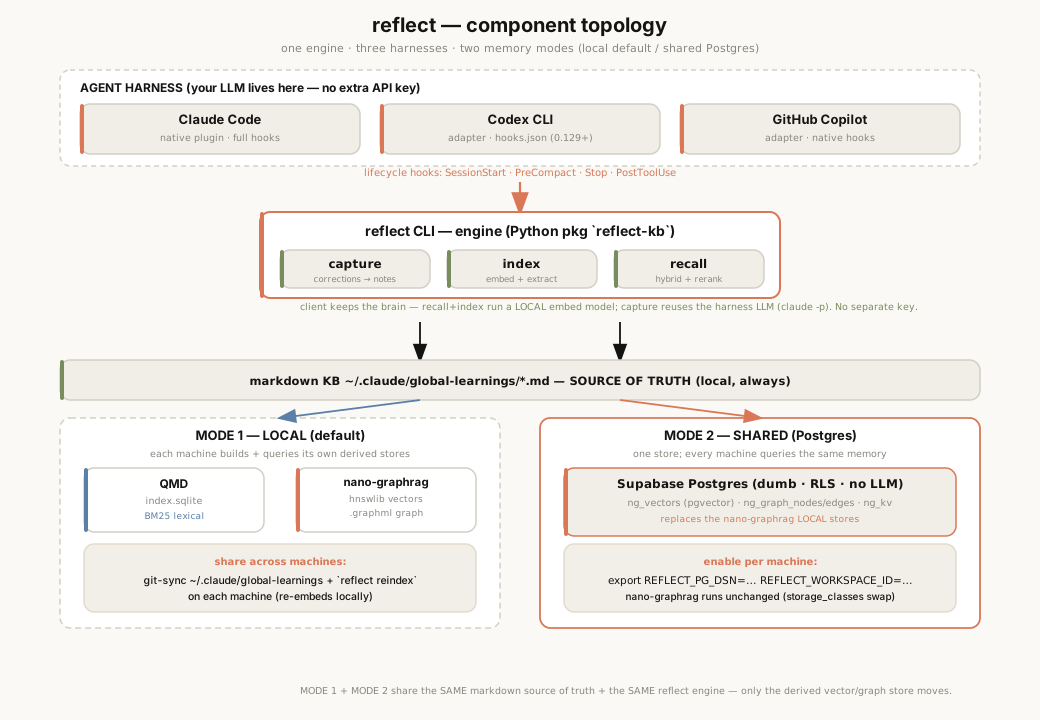
Backend: local or shared (Postgres)
The markdown notes are always the local source of truth, and all LLM / embedding / clustering always stays client-side — no extra API key. Only the derived vector + graph store has two modes:
| Mode 1 — Local (default) | Mode 2 — Shared (Postgres) | |
|---|---|---|
| Derived store | per-machine: QMD index.sqlite (BM25) + nano-graphrag (hnswlib + .graphml) | one Supabase Postgres (pgvector) for everyone |
| Setup | nothing | REFLECT_PG_DSN + REFLECT_WORKSPACE_ID + 2 migrations |
| Share across machines | git-sync the notes, then reflect reindex on each machine | automatic — every machine queries the same store |
In Mode 2, nano-graphrag runs unchanged — it’s handed Postgres-backed storage classes (the same
way it ships Neo4jStorage). The DB stays dumb (no LLM/embeddings); tenant isolation is RLS
(fail-closed) + explicit workspace_id scoping; writes need a service_role DSN.
➡️ Full backend reference (schema, setup, threat model, per-harness install):
stevengonsalvez/ainb-reflect-memory.
Next
Each stage above has knobs. The Recall reference documents every recall-time feature with a concrete example and the counterfactual — what you’d get without it.